Table Of Content
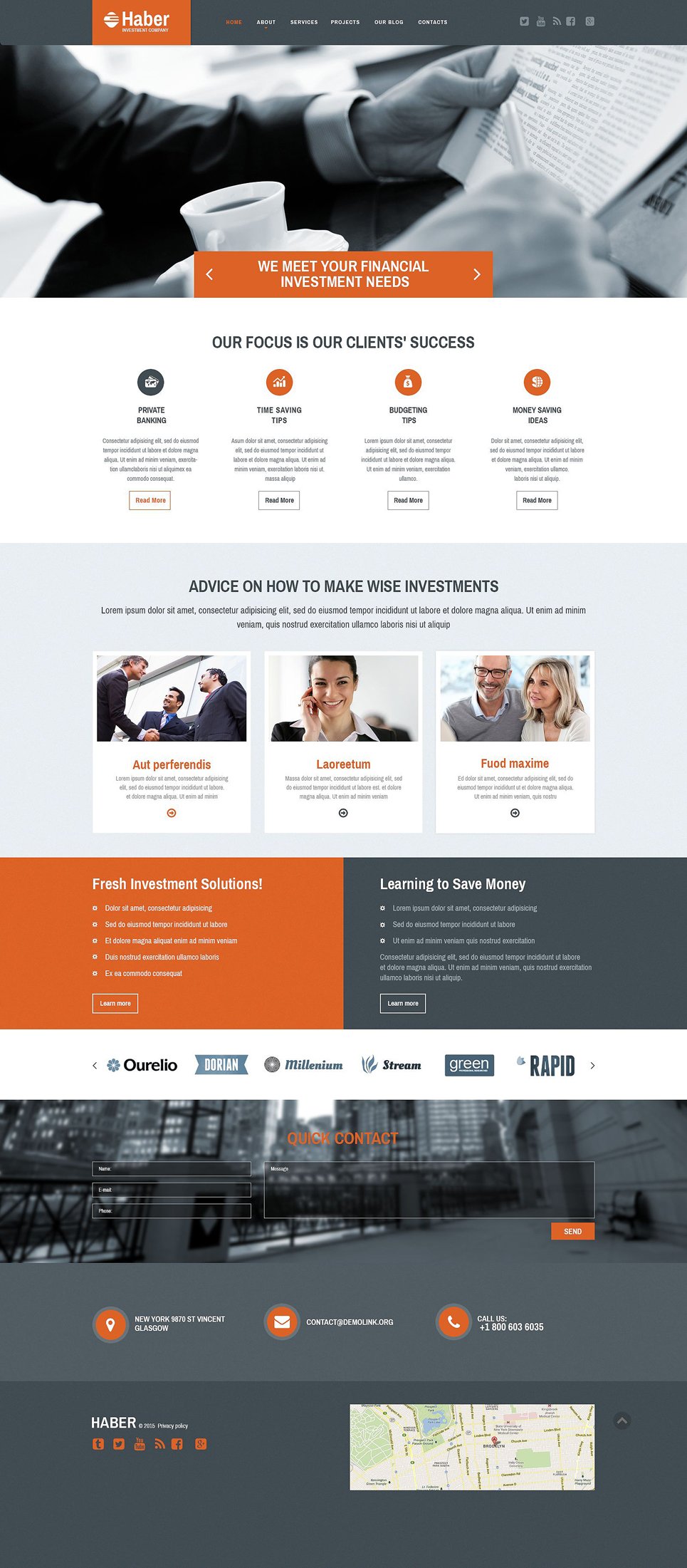
Links and buttons with a call to action serve as waypoints, instructing users where to go next. People could find it difficult to understand how and where they must make a purchase or join a program without clear CTAs. Content organization is more than just copying and pasting blocks of text to see where they’ll fit on a page. Instead, view your content as the story you’re trying to tell your audience. You’ll generally only have room for 4-5 core links in your navigation which affects your site’s entire content strategy and information architecture. Be sure those links represent the places people are most likely to look for, then offer opportunities to dig deeper.
Column 3
1vw is equal to one percent of the viewport width, meaning that if you set your font size using vw, it will always relate to the size of the viewport. Responsive web design (RWD) is a web design approach to make web pages render well on all screen sizes and resolutions while ensuring good usability. In this article, we'll help you understand some techniques that can be used to master it.
Websites with 100s of Templates Available
The browser then works out the size of these, a size that will change according to the screen size. Several layout methods, including Multiple-column layout, Flexbox, and Grid are responsive by default. They all assume that you are trying to create a flexible grid and give you easier ways to do so. Responsive sites are built on flexible grids, meaning you don't need to target every possible device size with pixel perfect layouts. If using breakpoints, best practices encourage defining media query breakpoints with relative units rather than absolute sizes of an individual device.

Web Building
Website design refers to the process of conceptualizing, planning, and creating the visual layout, structure, and functionality of a website. It involves a combination of artistic creativity, technical expertise, and user-centered principles to craft an online experience that is both visually appealing and user-friendly. Website design encompasses various elements, including layout, color scheme, typography, images, navigation menus, and interactive features. Responsive web design term is related to the concept of developing a website design in a manner that helps the layout to get changed according to the user’s computer screen resolution. More precisely, the concept allows for an advanced 4 column layout 1292 pixels wide, on a 1025 pixel width screen, that auto-simplifies into 2 columns.
Responsive web design examples
Responsive Web Design: 50 Examples and Best Practices - Designmodo
Responsive Web Design: 50 Examples and Best Practices.
Posted: Mon, 02 Jan 2023 08:00:00 GMT [source]
You can use the columns shorthand to provide a maximum number of columns and a minimum column width. This can ensure line lengths don't become unreadably long as the screen size increases or too narrow as the screen size decreases. Responsive web design isn't a separate technology — it is an approach.
How to Optimize Your Mobile Website for Organic Search - Business News Daily
How to Optimize Your Mobile Website for Organic Search.
Posted: Fri, 01 Dec 2023 08:00:00 GMT [source]
Before delving into the role of AI in website design, it’s essential to understand the evolution of this field. In the early days of the internet, websites were basic and static, primarily consisting of text and images. However, as technology advanced, so did the expectations of internet users. Websites became more dynamic, interactive, and visually appealing, prompting the need for more sophisticated design techniques. Within marketing and business, the integration of artificial intelligence (AI) has emerged as a transformative force across various industries.
The mobile-friendliness of responsive web design also creates a better user experience for the many people who do their internet browsing, shopping, and banking on their phones. According to data from Zippia released in 2023, 82% of shoppers in the US are using their smartphones to make purchases, particularly for entertainment and food [1]. Search engines like Google favor user-friendly sites that engage visitors with quick load times, responsive layouts, and otherwise seamless user experience (UX). This particular technique serves the purpose of responsive designing in true sense as the images serve at different resolutions, ranging from larger screens to smaller ones. The scaled images appear to change fluidly with the help of updated developer tools and coding languages, allowing designs to look sharp in every context. A common approach with media queries is to show a multicolumn layout for large screens and reduce the number of columns one by one to fit the smaller screens.
viewport Meta Tag
It’s typically accomplished with viewport breakpoints (resolution cut-offs for when content scales to that view). The viewports should adjust logically on tablets, phones, and desktops of any resolution. This means that a 16px font size, for instance, would look bigger or smaller on some devices depending on its resolution.
Responsive Web Design vs Adaptive Design
Static websites no longer work as they don’t allow users the versatility to change devices and still have an enjoyable user experience. They’re presented in two columns on desktop and laptop computers and one column on tablets and mobile phones. Only the call-to-action button and illustrations changed between desktop to mobile devices. Dropbox has done a great job of using a fluid grid and flexible visuals to design a standout responsive website. Not only does the font color change to accommodate the background color when shifting from desktop to handheld devices, but the image changes orientation as well.
All designers have to do, after picking a theme, is to decide on colour, branding, and text. In responsive design, a breakpoint is the “point” at which a website’s content and design will adapt in a certain way in order to provide the best possible user experience. Discover why mobile-first design is essential for present and long-term success and how to create mobile-friendly layouts for improved user experiences. A common problem with responsive design is that while images visually scale on smaller devices, they’re still 3MB in size and slow load times to a crawl.
Let us walk through some good practices that may help you create a fully responsive website that meets all your users’ expectations. Just as with device breakdown, we should segment the data by location to match the user demographics (or anticipated user demographics) of our target audience. It’s also worth catering to resolutions that are gaining popularity, because while some screen sizes are currently not that common, they may be in the future.
In the end, on mobile devices, the website should have one column and slide-out navigation. Media queries allow building different layouts within one project by tweaking your whole design or parts to best suit the screen size. With them, you can re-arrange and reorder existing elements like columns, rows, and containers using basic CSS.
It’s what allows users to have a smooth experience of a web page regardless of whether they’re viewing it on a wide desktop monitor or small mobile screen. Like other responsive websites, the grid they’ve constructed to present customer logos is extremely flexible. It collapses from five columns on desktop computers to four columns on tablets to two columns on mobile phones. While the full menu, including a “Get Proposal” call-to-action button and “We’re hiring!
It also uses an off-canvas menu with social media links to enhance brand awareness. Seven Hills Wholefoods provides superfoods that are nutrient-rich and have various health benefits. The homepage design is stunning with its horizontal scroll in displaying the content.
The browser will create as many columns of that width as will comfortably fit into the container, then share out the remaining space between all the columns. Therefore the number of columns will change according to how much space there is. With multicol, you specify a column-count to indicate the maximum number of columns you want your content to be split into.




No comments:
Post a Comment